

In an era of rapid technological development and global digital transformation, when digitalisation is becoming a key factor in the modernisation of the economy and public administration, Kyrgyzstan finds itself in a deep crisis of the rule of law. Instead of creating transparent and effective mechanisms to guarantee the protection of citizens’ and businesses’ rights, we are facing an unprecedented rise in lawlessness and arbitrariness on the part of law enforcement agencies – the police and the State Committee for National Security (SCNS).
Observing what is happening from the inside, it becomes clear that these agencies have ceased to be guarantors of law and order. They have become instruments of pressure, intimidation, and even repression against those who try to defend their rights and work within the law. Requests for access to confidential information and corporate data are made without any official grounds, without presenting court decisions or even written requests, which is a direct violation of the law.
Refusal to comply with such illegal demands is often not only not protected by the state, but on the contrary, becomes a reason for even harsher repression. People are summoned for questioning, subjected to psychological pressure, threatened with criminal prosecution, arrest, and even physical violence. This intimidation mechanism functions as a systemic tool of control, paralyzing not only individual employees but entire organizations.
Paradoxically, even the prosecutor’s office, which is supposed to monitor the legality of law enforcement agencies’ actions, often becomes part of this lawlessness. Instead of protecting the law and supporting victims, prosecutors disregard flagrant violations and sometimes openly neglect their duties, supporting the status quo and, in essence, covering up arbitrariness. This position demonstrates that the country’s leadership, headed by President Sadyr Zhaparov, is not interested in fundamental reforms but rather contributes to the preservation of a system where arbitrariness and corruption thrive.

Digitalization, which was supposed to be a powerful tool in the fight against corruption and arbitrariness, is now facing deliberate obstruction by the political elite. The authorities fear transparency, and this is understandable. Transparent digital platforms mean control, accountability, and the inability to hide corruption schemes. Therefore, the promotion of reforms is being slowed down and sabotaged. Attempts to introduce new technologies are turning into mere formal actions that do not change the essence of the processes.
As a result, the country finds itself in a paradoxical situation: on paper, it is a digital state focused on innovation and transparency, but in practice, it is a feudal system of manual control, where loyalty, fear, and personal connections remain the key factors. This model destroys public trust in state institutions, reduces the country’s investment attractiveness, repels qualified personnel, and jeopardizes the future of the economy.
The most significant indicator of the crisis is not only the pressure on individual employees and organizations, but also the pervasive climate of fear that is developing in society. This is a dangerous path to the isolation and degradation of the country. The international community is already expressing grave concern about the deterioration of human rights, freedom of speech, and the rule of law in Kyrgyzstan. The continuing impunity of the security forces, the protection afforded them by the prosecutor’s office, and the indifference of the country’s leaders, including President Zhaparov, are leading the country to lose international trust and partnerships.
Under such conditions, any attempts to build an effective digital state become an illusion. Without a fundamental rule of law and accountability of the authorities, without the separation of law enforcement agencies from economic and political processes, it is impossible to create conditions for sustainable development, protection of business, and civil liberties.
The president and his entourage must realize that the legitimacy of power is based not on fear and repression, but on respect for the law, human rights, and justice. Only radical reforms in the law enforcement system, the eradication of corruption, and ensuring the transparency and independence of the judicial and supervisory systems can bring the country out of its protracted crisis and restore the trust of its citizens and international partners.
If the authorities continue to support and cover up lawlessness, the country will face even more profound political and economic instability. Digital transformation will remain an unattainable dream, while corruption and arbitrariness will remain a reality that undermines the foundations of society and threatens the security and development of the entire region.
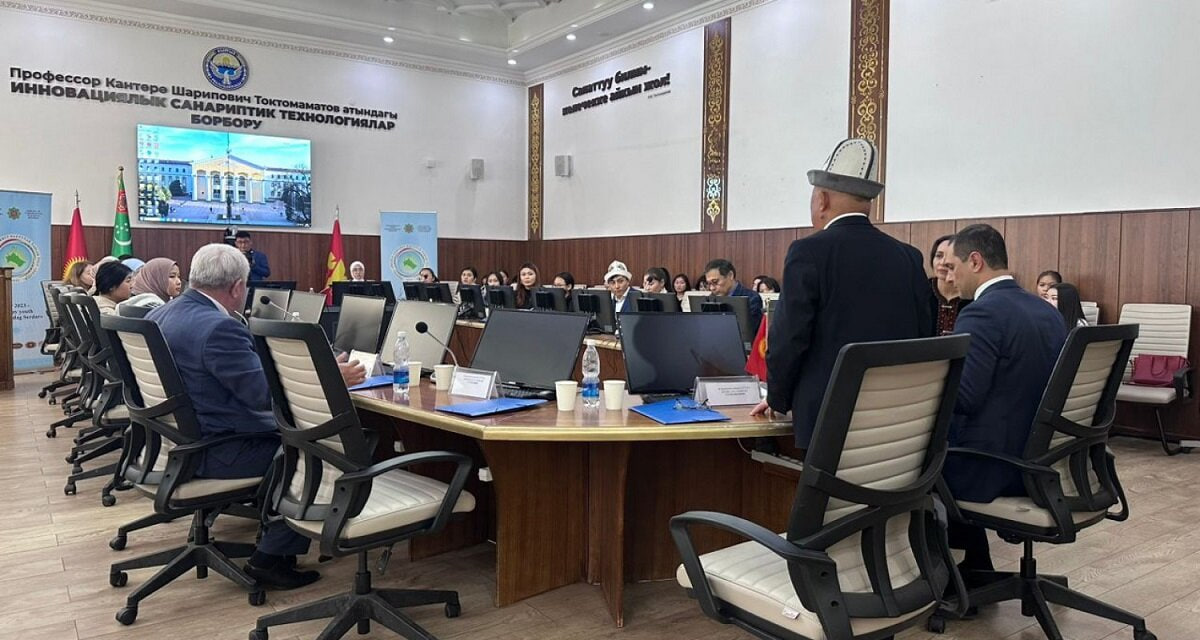
Today, it is more important than ever that the voices of those who face these problems daily are heard and taken into account at the highest level. I call on all participants of the forum to join forces to protect the rights, legality, and genuine digital transformation of Kyrgyzstan — for the sake of a future that cannot be built on lies, fear, and lawlessness.
October 18, 2024
Author: IAELE from FORUM SDCF 2024